Foundation repair in Fort Wayne costs $4,000–$15,000 for most structural repairs, with basement waterproofing $2,500–$8,000 and piers $1,200–$3,000 each. Dense glacial till holds water against foundations here, and winter freeze expansion adds lateral load — which is why water work usually comes first.
Below: what the symptoms mean, why Allen County ground behaves this way, and how the repairs get sequenced.
What a struggling foundation looks like from the basement
In basement country the evidence is usually downstairs before it's upstairs:
- A horizontal crack partway up a block wall — the signature of lateral pressure
- A wall visibly bowing inward, measurable with a straightedge or a plumb line
- Water at the cove joint where the wall meets the floor, especially after storms
- Efflorescence — white mineral bloom on block, showing water is moving through
- Stair-step cracks in block walls, often near corners
- Doors sticking upstairs and floors sloping — the settlement side of the problem
A hairline vertical crack that stays dry can be watched. Anything horizontal, anything bowing, and anything wet after every storm deserves measurement now — those get worse on a schedule set by the weather, not by your calendar.
Glacial till, three rivers, and a winter that pushes
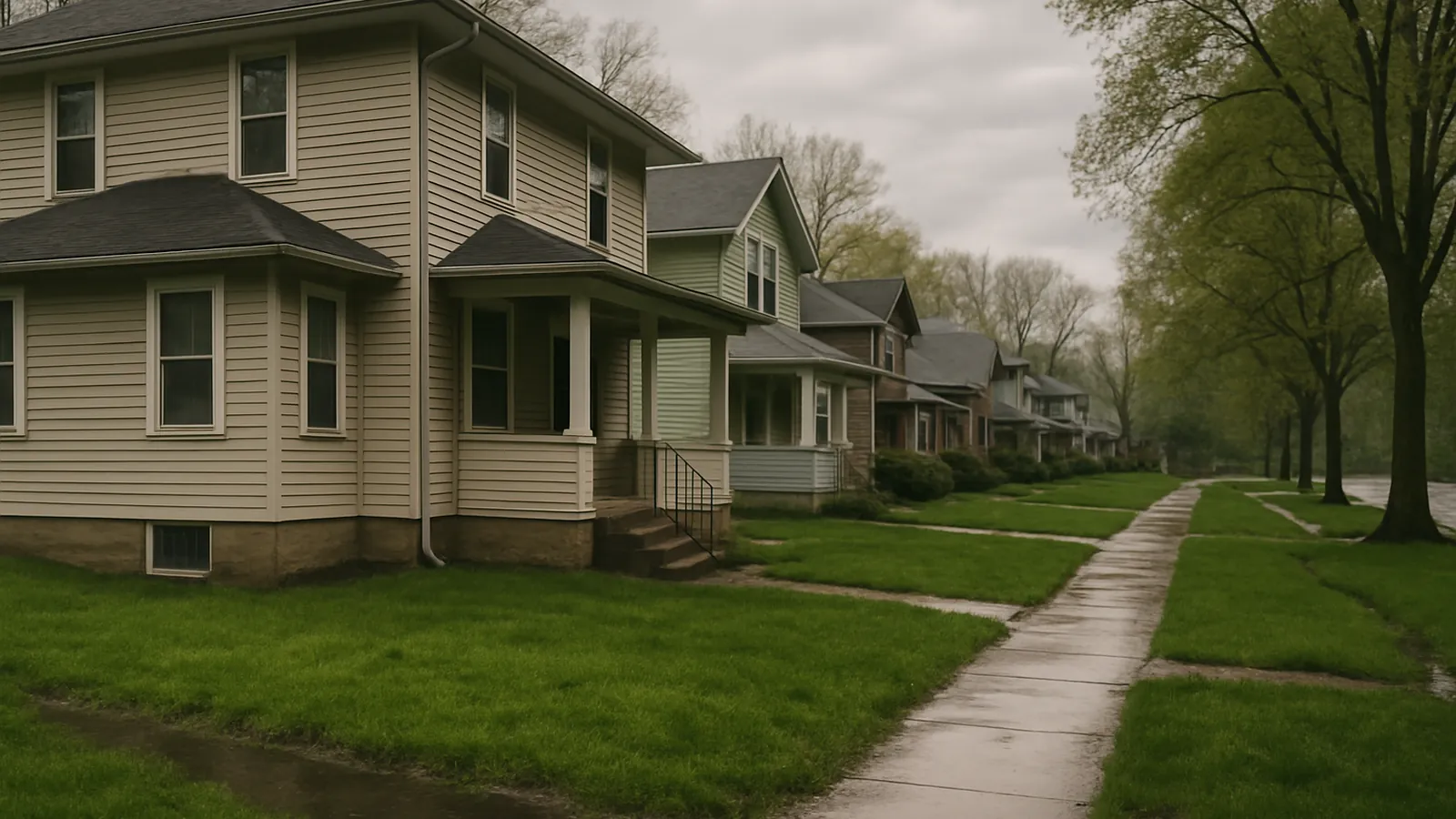
Fort Wayne sits where the St. Joseph and St. Marys rivers meet to form the Maumee, on ground the Wisconsin glaciation left behind: dense till and lakebed clays that are poorly drained by nature. Water arriving as rain or snowmelt doesn't percolate away quickly — it perches in the soil and leans against whatever is holding it back. Across much of Allen County the water table sits high enough that basements are working against groundwater as well as storm water.
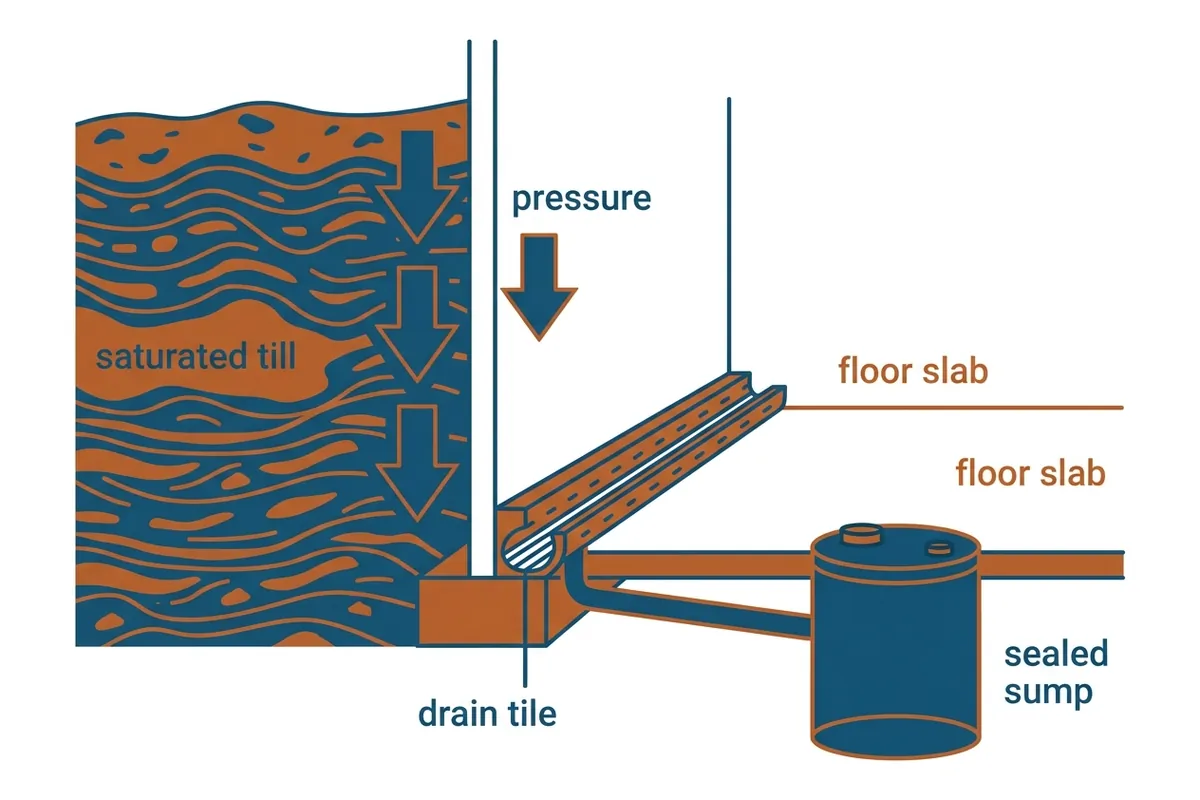
Then winter adds its own mechanism. Northern Indiana drives frost deep into clay-rich soils, and water expands roughly nine percent as it freezes. Saturated backfill against a basement wall becomes a slow hydraulic jack, cycling with each hard freeze. That combination — year-round hydrostatic pressure plus seasonal ice expansion — is why bowing walls and wet basements are this market's defining foundation problems rather than the settlement cracking that dominates drier clay regions.
The repairs that fix Fort Wayne houses
| What you see | What's happening | The fix | Typical range |
|---|---|---|---|
| Water at the cove joint, damp walls, efflorescence | Saturated till holding water against the wall | Interior drainage and sealed sump | $2,500–$8,000 |
| Horizontal crack, wall bowing inward | Lateral pressure plus winter ice expansion | Carbon fiber, braces, or anchors | $2,500–$10,000 |
| Sticking doors, sloping floors, dropped corners | Footing settling in saturated or disturbed soil | Piers to stable bearing | $4,000–$15,000 |
| Cracks leaking or widening | Movement or shrinkage opening a water path | Injection and reinforcement | $400–$1,500 |
| Sunken driveway, patio, or walk panels | Backfill consolidating, frost heave at edges | Polyurethane lifting | $500–$2,500 |
Most Allen County houses need two of these, not five — and the order matters more here than the selection does.
The decisions behind the table go deeper on their own pages: how we read settlement on saturated till, when helical piers beat push piers under brick or frame, how exterior and interior waterproofing compare against a high water table, what insurance covers — and the sump and flood endorsements worth checking, and when an independent structural engineer is worth the fee.
Water first is not a sales preference, it's physics
Every scope we write in this market puts water management ahead of structural steel, and the reason is mechanical rather than philosophical. A brace or a carbon fiber strap resists a load. If that load is saturated soil expanding into ice every January, the restraint spends the winter fighting a force that drainage would have removed for a fraction of the cost. Manage the water first and the same wall system holds with margin to spare; skip it and you have installed expensive steel into an ongoing problem.
That's also why the cheapest lines appear first on our scopes — gutters, six-foot downspout extensions, regraded swales. On this ground those are structural work, not landscaping.
How the evaluation works
We measure wall deflection with a plumb line or straightedge, photograph and measure every crack, shoot floor elevations with a laser, trace the water story outside from gutters to grading to discharge, and check the sump and its line where one exists. You get a written scope naming the cause, the sequence, the price per line, and the timeline — free, and yours to compare against any other bid.
Foundation questions Fort Wayne homeowners ask
How much does foundation repair cost in Fort Wayne?
Most full repairs run $4,000 to $15,000, with piers commonly $1,200 to $3,000 each, basement waterproofing systems $2,500 to $8,000, and crack repair from about $400. In Allen County the water work is often the larger line, because water is usually the cause. Every figure follows a free measured evaluation. Our Foundation repair cost breakdown for Fort Wayne shows what drives each figure, line by line.
Why do so many Fort Wayne basements leak?
Three rivers converge here and the water table sits high across much of the county. Add dense glacial till that holds water near the surface rather than draining it, and a basement wall spends much of the year with saturated soil pressing against it. Leaking isn't a defect in most cases — it's what this ground does to an unmanaged basement.
What causes a basement wall to bow inward?
Lateral pressure, applied two ways. Saturated till pushes horizontally against the wall year-round. Then winter adds the sharper load: water in that soil freezes and expands roughly nine percent in volume, turning the backfill into a slow hydraulic jack. That's why Fort Wayne walls often show their worst movement in late winter.
Is my bowing wall an emergency?
It depends on deflection. Under an inch, it's a repair to plan rather than panic over — carbon fiber or braces handle it. Past two inches, or with visible shearing at the top or bottom of the wall, it deserves attention soon and we may advise staying out of that part of the basement until it's evaluated. Measurement is free, so the threshold for calling is low.
Do I need waterproofing or foundation repair?
Often both, in that order. On Allen County ground the water usually comes first and the structural damage follows it. An honest scope manages the water before installing steel, because restraint fighting saturated, freezing backfill is steel on overtime. The evaluation tells you which problem you actually have.
How deep does frost go here?
Deep enough to matter. Northern Indiana winters drive substantial frost penetration, and clay-rich soils carry frost deeper than sandy ones. That's why footings are set below the frost line by code — and why the freeze-expansion pressure on basement walls above that depth is a real structural load rather than a theoretical one.
Will a sump pump solve my problem?
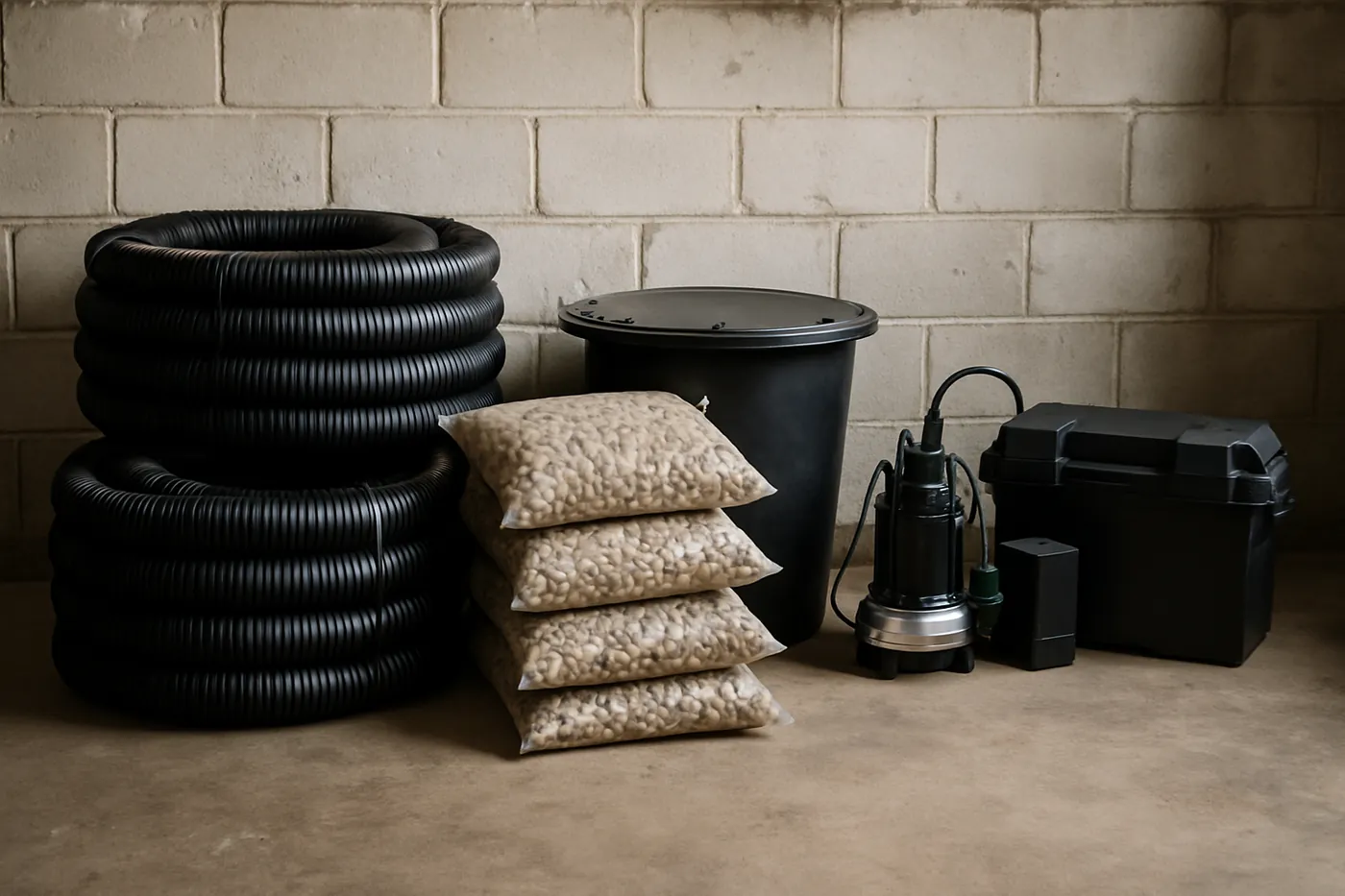
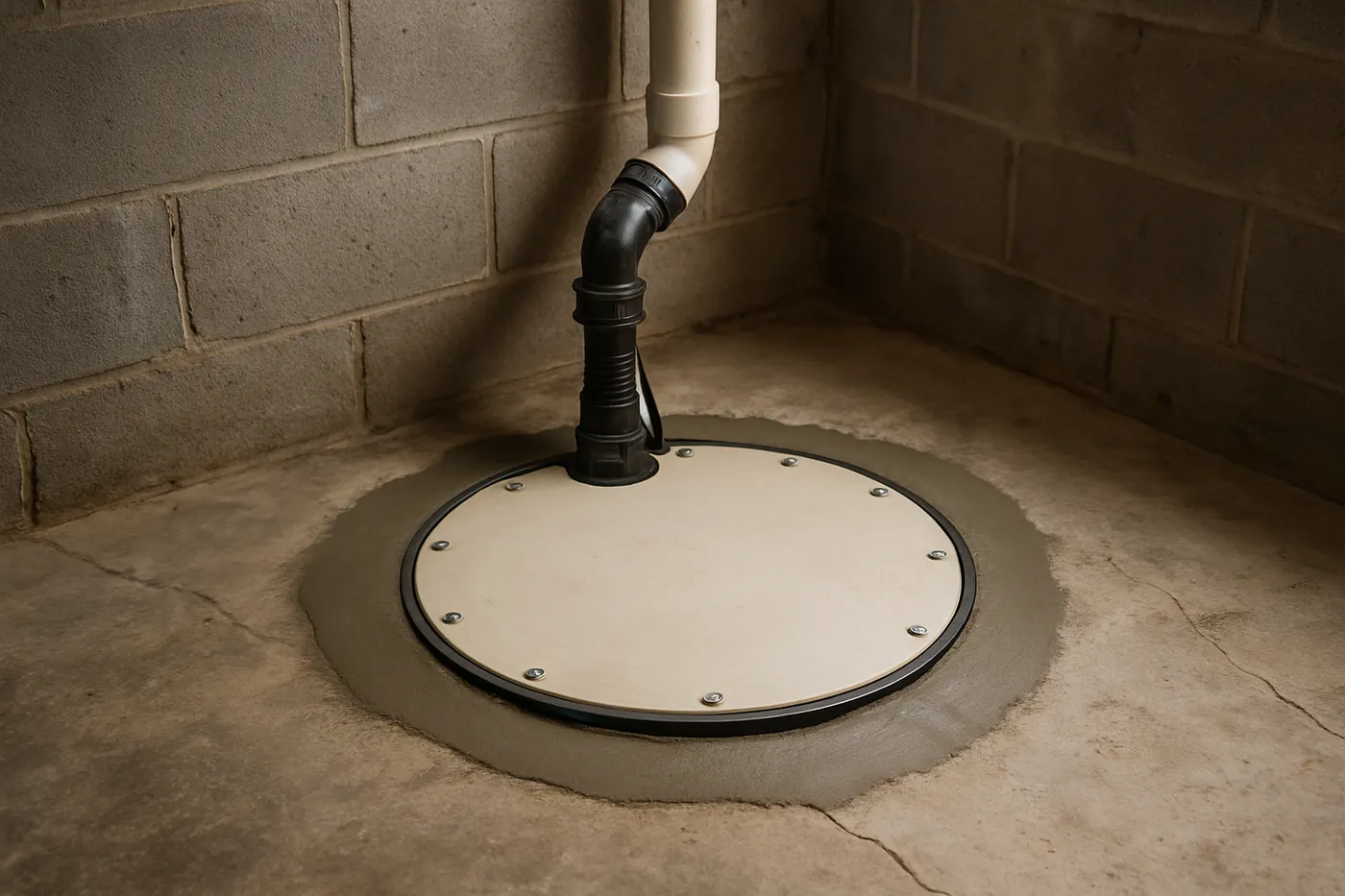
Sometimes, and often it's one piece. A sump is the discharge end of a drainage system; without a channel collecting water at the footing, it's a bucket in the wrong place. Where a basement weeps at the cove joint after storms, the system that works is interior drainage plus a sealed sump plus a discharge line routed far enough that the till can't wick it back.
Will insurance cover any of this?
Groundwater intrusion and earth movement are excluded by nearly every standard policy. Sudden events — a burst supply line, a failed appliance — are the ones that usually carry coverage. We document cause and timeline during the evaluation in the format adjusters actually use, whichever way a claim goes.
Foundation repair across Allen County and northeast Indiana
New Haven · Huntertown · Leo-Cedarville · Woodburn · Grabill · Auburn · Columbia City · Bluffton · Decatur · all service areas
Get a free Fort Wayne foundation evaluation
Tell us what the basement is doing — water at the cove joint, a wall bowing inward, a horizontal crack in block, floors going out of level — and we’ll schedule an evaluation with photos, wall measurements, and floor elevations. We reply the same business day.