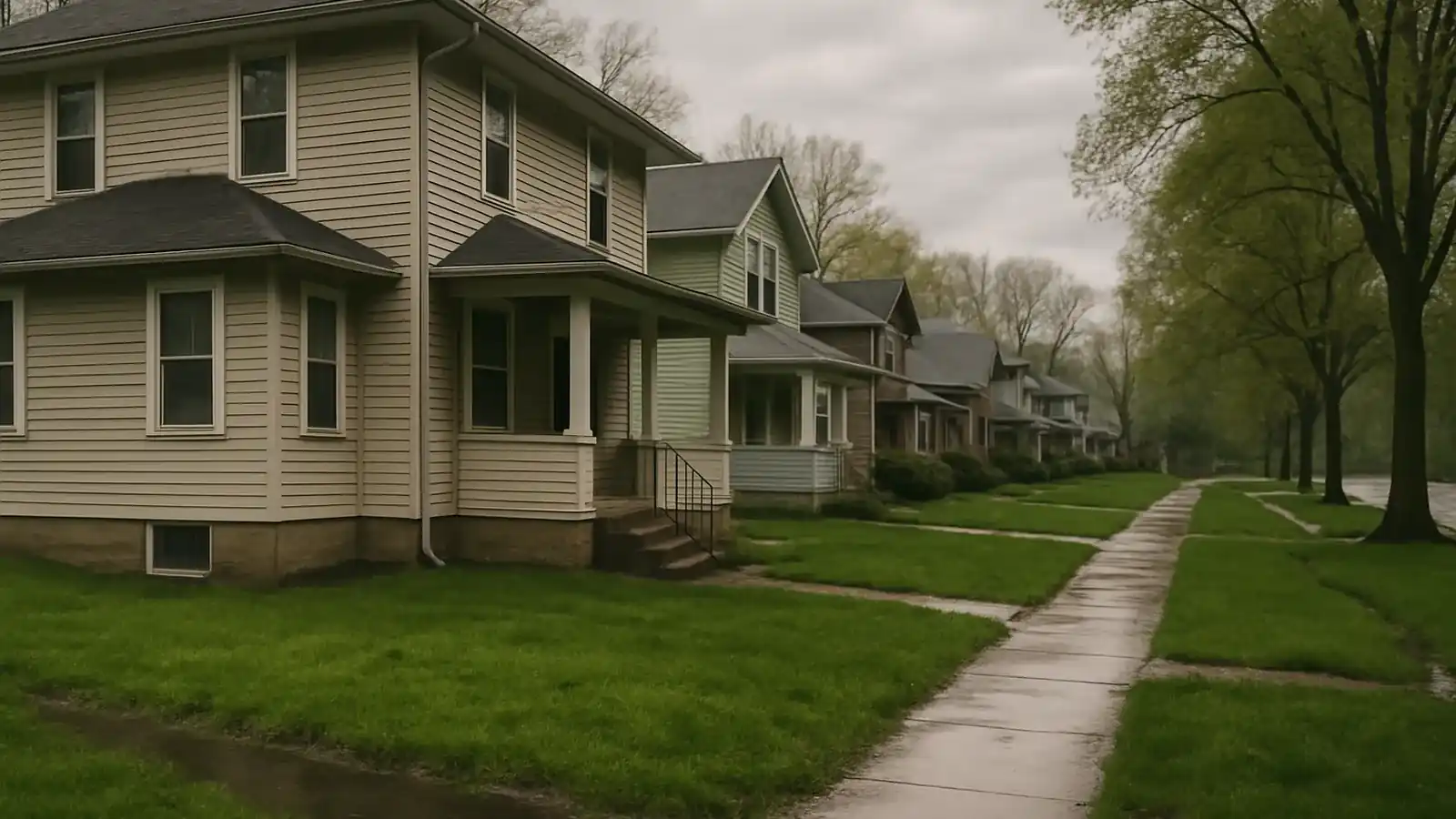
Huntertown homeowners typically spend $2,500–$8,000 on a basement waterproofing system and $2,500–$10,000 on bowing-wall repair, with crack work from about $400. In these young subdivisions, backfill that stays wet and freezes each winter is the usual load on the walls; measurements show which force is winning.
Fast growth means graded ground
Huntertown has absorbed a large share of Allen County's recent residential growth, and rapid subdivision development means substantial earthwork: cutting high spots, filling low ones, producing level pads on ground that wasn't level. That process routinely leaves one part of a house on undisturbed native till and another part on placed fill.
The two settle on different schedules. Fill consolidates hardest in its first decade and tapers; native till beneath stays put. The resulting crack often runs along the line where cut meets fill rather than at a random corner, and locating that boundary is the first task on a Huntertown evaluation. It sets both where piers go and how deep they have to travel to find honest bearing.
Young houses, real basement problems
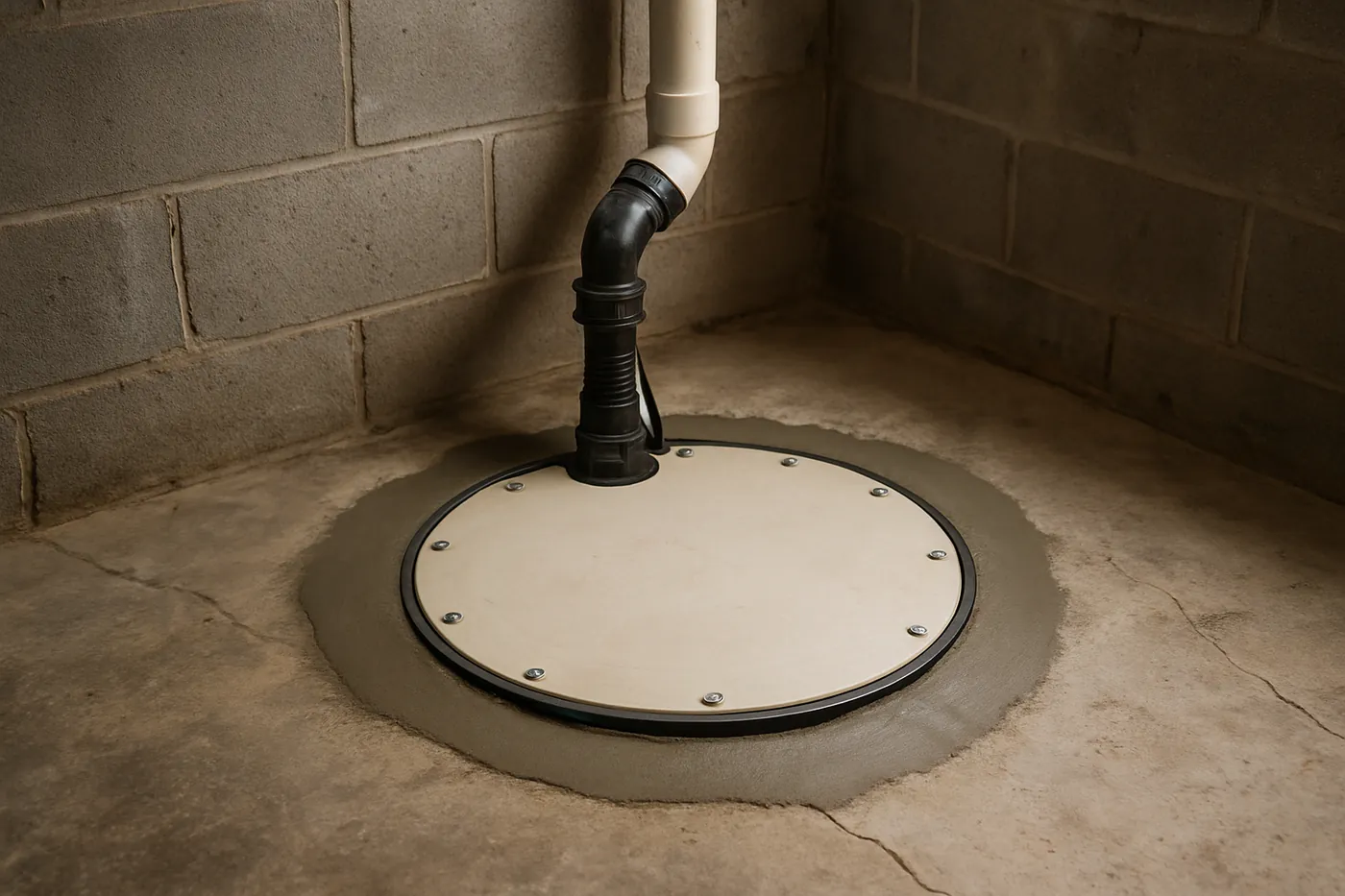
New construction is not exempt here, and Huntertown owners are often the most surprised. A five-year-old basement can weep at the cove joint for reasons that have nothing to do with build quality: backfill around a new foundation is loose and porous compared to the native soil around it, so it acts as a collection trench delivering surface water straight down to the footing. Builders call it the bathtub effect, and it's why downspout extensions matter more on a new house than on an old one.
Where the house is still inside a structural warranty window, that path is worth pursuing before spending anything out of pocket, and warranty administrators want measurements and a stated cause, which is exactly what a good written evaluation provides.
Asked in Huntertown
My house is only a few years old. Why is the basement wet?
Usually the backfill. Soil replaced around a new foundation is looser and more porous than the native ground around it, so it collects surface water and delivers it straight down to the footing: the bathtub effect. It's normal, it's not a build defect, and downspout extensions plus grading often solve it outright.
Is my Huntertown home still under builder warranty?
Worth checking before you spend anything. Structural warranty windows commonly run years past cosmetic coverage, and documented movement may qualify. Administrators want measurements and a stated cause rather than a photo of a crack, which is exactly what a good written evaluation report provides.
How do I know if my house sits on fill?
The plat and the crack pattern usually tell. Cut-and-fill homes crack along the line where the two meet rather than at a random corner. A good specialist reads the floor survey against the development records where they're available, because that boundary determines both pier placement and how deep piers must go.
Does being on fill mean the builder cut corners?
Usually not. Cut-and-fill grading is standard practice for producing buildable pads, and well-compacted fill performs fine. The issue is that fill and native till settle on different schedules regardless of compaction quality. That's soil mechanics rather than workmanship.
Huntertown's very young housing
Huntertown had about 3,800 homes in the 2020-2024 American Community Survey, and its median home was built in 2011. More than 36% went up in the 2010s and 16% since 2020; in all, about 83% date from 2000 or later, and nearly 92% are owner-occupied. Most Huntertown basements are still in the first-decade fill-settlement window described above.
Cedar Creek and Willow Creek
USGS lists measurement sites on Cedar Creek, Little Cedar Creek and Willow Creek around Huntertown. A basement that takes water after storms may be telling you about the lot's grading as much as about the wall itself.
Who to ask about permits
Huntertown's website lists its utilities, water and wastewater, streets and municipal code, but no building permit page. Ask Town Hall, or the specialist who calls back, which office issues the permit for a pier or wall repair at your address.
Drop a plumb line, mark and date any crack, then request the evaluation. Costs are itemized in the cost guide; nearby communities are under service areas.
Get a Fort Wayne foundation evaluation
Tell us what the basement is doing: water at the cove joint, a wall bowing inward, a horizontal crack in block, floors going out of level, and we'll pass it to one independent local specialist for an evaluation. You get a call back from a local specialist who serves Fort Wayne.