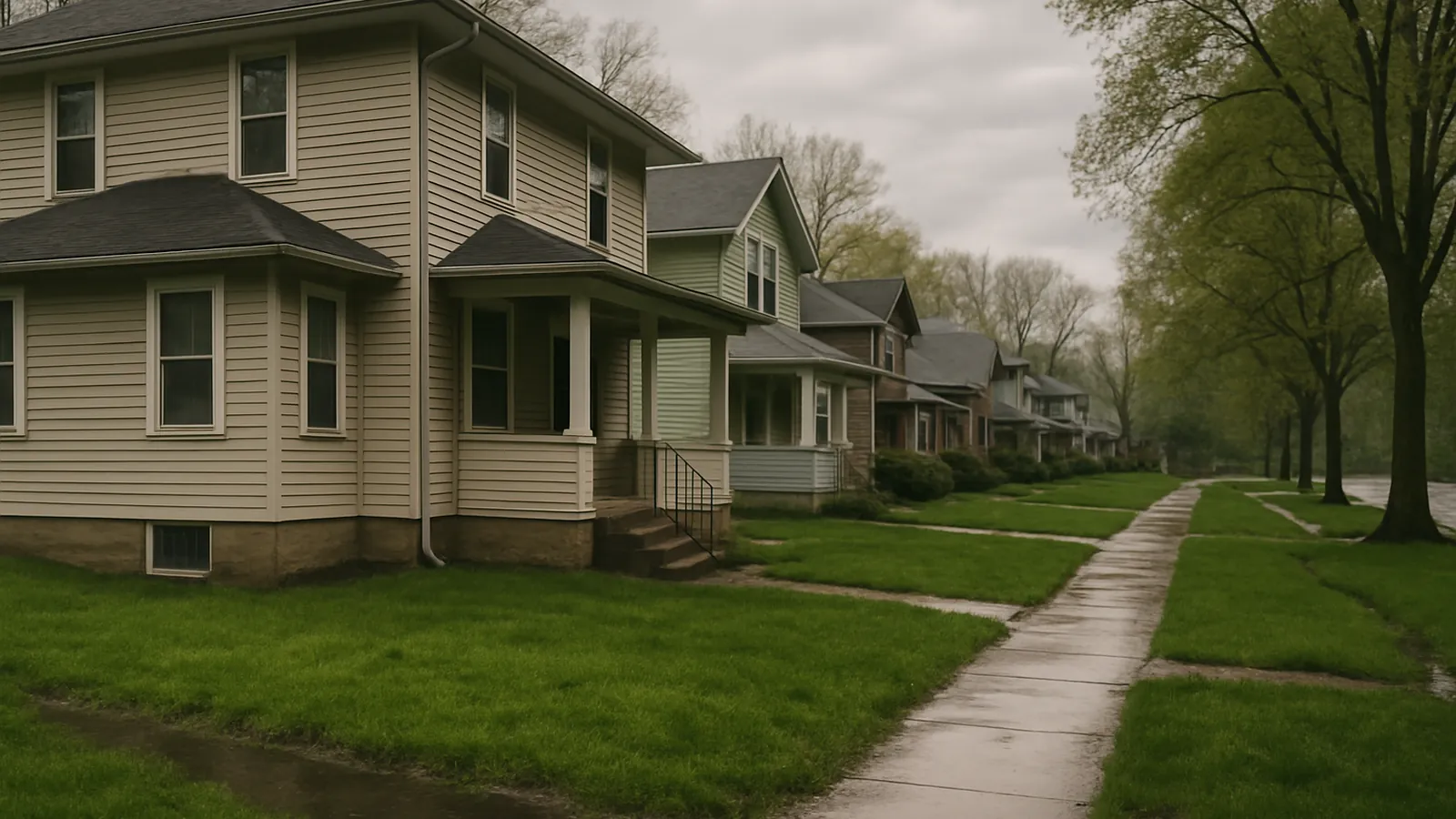
Concrete leveling in Fort Wayne costs $500–$2,500 for most residential slabs, against three to five times that for replacement. Polyurethane foam is injected through penny-sized ports, lifts the slab to grade, and cures in minutes — usually same-day traffic.
Here's why Fort Wayne flatwork drops, and when lifting is the right call.
Frost heave and backfill: the local pattern
Driveways, patios, walks, and porch slabs sit directly on soil, with no footing carrying them below the frost line the way your foundation has. That's by design and it's fine most places. In northeast Indiana it means flatwork rides the full winter: water in the base freezes and lifts the slab, the thaw drops it back onto a base that's now looser than it was, and the cycle repeats every season until panels no longer line up.
The second driver is the trench. Every foundation is ringed by backfill that was excavated and replaced during construction, and that material consolidates for years no matter how well it was handled. Slabs poured over that ring — which is most walkways and a lot of patios — drop with it. The two mechanisms produce this market's signature flatwork failures: driveway panels stepping down at the joints, and patio slabs tilting back toward the house.
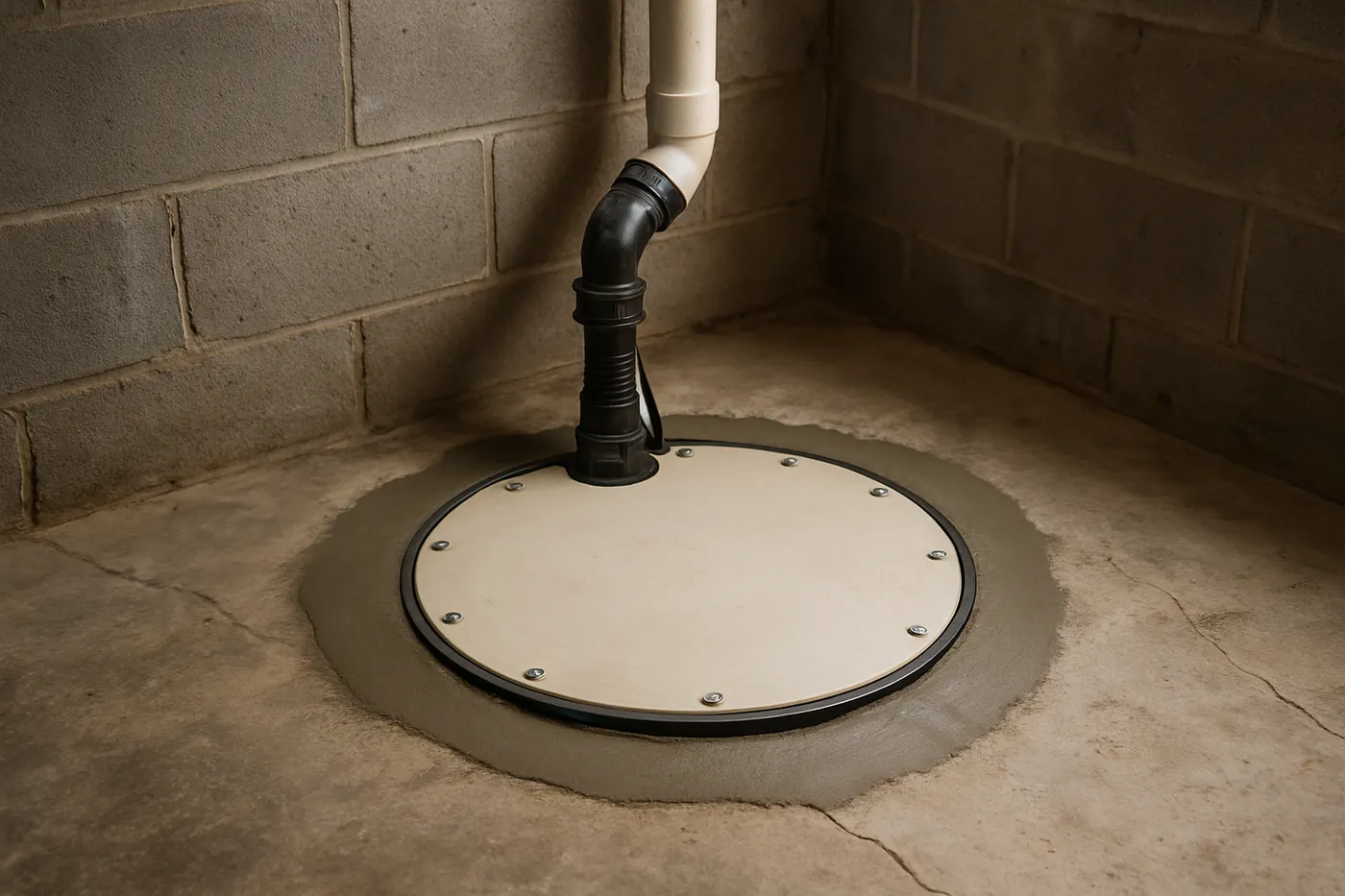
That tilt is a foundation problem, not a cosmetic one
A patio pitched toward the house delivers every rainfall and every snowmelt directly to the foundation wall — feeding exactly the saturated backfill that loads basement walls and softens bearing soil. On this ground, correcting slab pitch is drainage work that happens to also look better. It belongs in the same conversation as basement waterproofing, and it's frequently the cheapest line in it.
How the lift works
Penny-sized ports are drilled through the slab. Structural polyurethane is injected beneath, expanding to fill voids and raise the concrete in controlled increments while elevation is checked against a level line. Ports are patched flush at completion. The foam is inert, won't wash out under a high water table, and weighs a small fraction of the mudjacking slurry it replaced — which matters on a base that already proved it moves.
When replacement is the honest call
Foam lifts sound concrete. Where a slab has spalled from years of freeze-thaw and road salt, or where the pieces no longer interlock enough to lift as a unit, replacement is the recommendation — and we'll say so rather than take a lifting job that won't hold through one winter.
Lift it, support it, or replace it?
Northern Indiana flatwork takes a double load: glacial till that holds water, and winters that freeze it. Water expands about nine percent when it freezes, and it lifts concrete on the way.
| Option | What it does | The local deciding factor |
|---|---|---|
| Foam injection | Ports drilled, expanding foam raises the panel | Works well once spring has fully released the frost — timing the lift matters here |
| Slurry pumping | A cement mix floats the slab back to grade | Good on larger panels over till, which drains too slowly to wash the slurry away |
| Piered support | Load carried to firmer ground before resetting | For slabs that carry structure, support has to reach below the frost line |
| Tear-out and repour | The panel is replaced rather than lifted | Right where repeated freeze cycles have already broken the panel |
A slab that heaves in January and drops in April is not settling — it is floating on the frost cycle. Fix the water first or the lift will not survive the winter.
Leveling questions, straight answers
How long does concrete leveling take?
Most residential slabs are lifted in a single afternoon. Polyurethane foam is injected through penny-sized ports, expands to fill the void and raise the slab, then cures within minutes — you can usually drive on a lifted driveway the same day, which matters when it's your only access.
Foam or mudjacking?
Foam, particularly here. Mudjacking pumps a heavy slurry under a slab that already failed under load, and on soil holding this much water that added weight works against you. Polyurethane weighs a small fraction as much, doesn't wash out, and its ports are far smaller, so the patches barely show.
Why do slabs drop so much around here?
Frost heave plus backfill consolidation. Flatwork sits directly on soil with no footing below the frost line, so a wet, freezing winter lifts it and the spring thaw drops it — repeatedly. Add the poorly compacted trench backfill ringing every foundation and you get the local pattern: driveway panels stepping down and patios tilting back toward the house.
Will it sink again next winter?
Not if the reason it dropped is handled. Foam corrects elevation; it doesn't correct a downspout saturating the base beneath the slab or a joint letting water in to freeze. Our slab scopes name the water source next to the lift price, cheapest correction first, because that's what determines whether you buy this once.
Get a free Fort Wayne foundation evaluation
Tell us what the basement is doing — water at the cove joint, a wall bowing inward, a horizontal crack in block, floors going out of level — and we’ll schedule an evaluation with photos, wall measurements, and floor elevations. We reply the same business day.