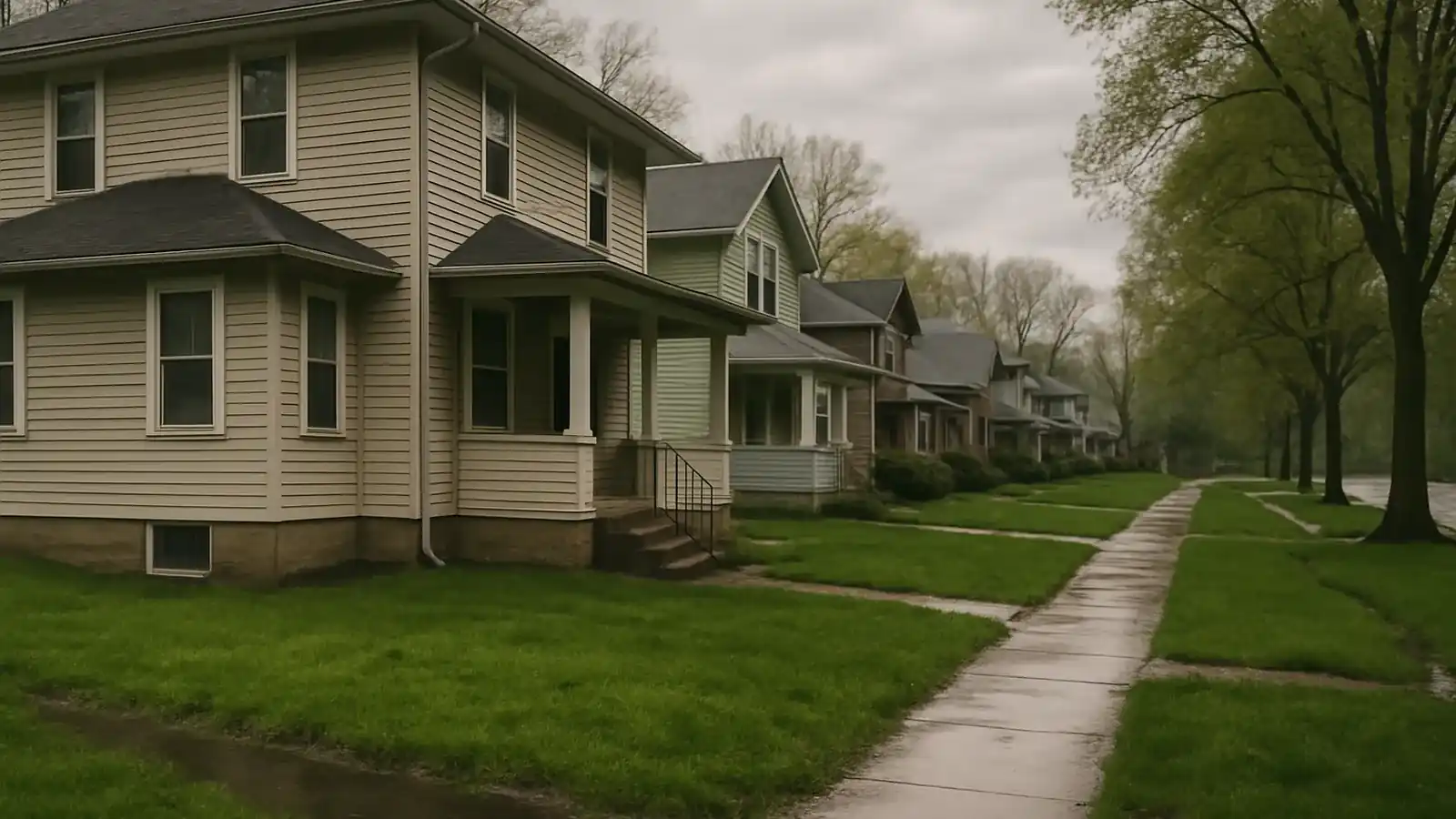
Auburn foundation work mostly costs between $2,500 and $15,000; how much of the basement takes water, how far the walls have deflected and whether piers are needed set the figure. The dense glacial till here holds water against basement walls instead of draining it. Ask whether the evaluation carries a charge when the specialist calls.
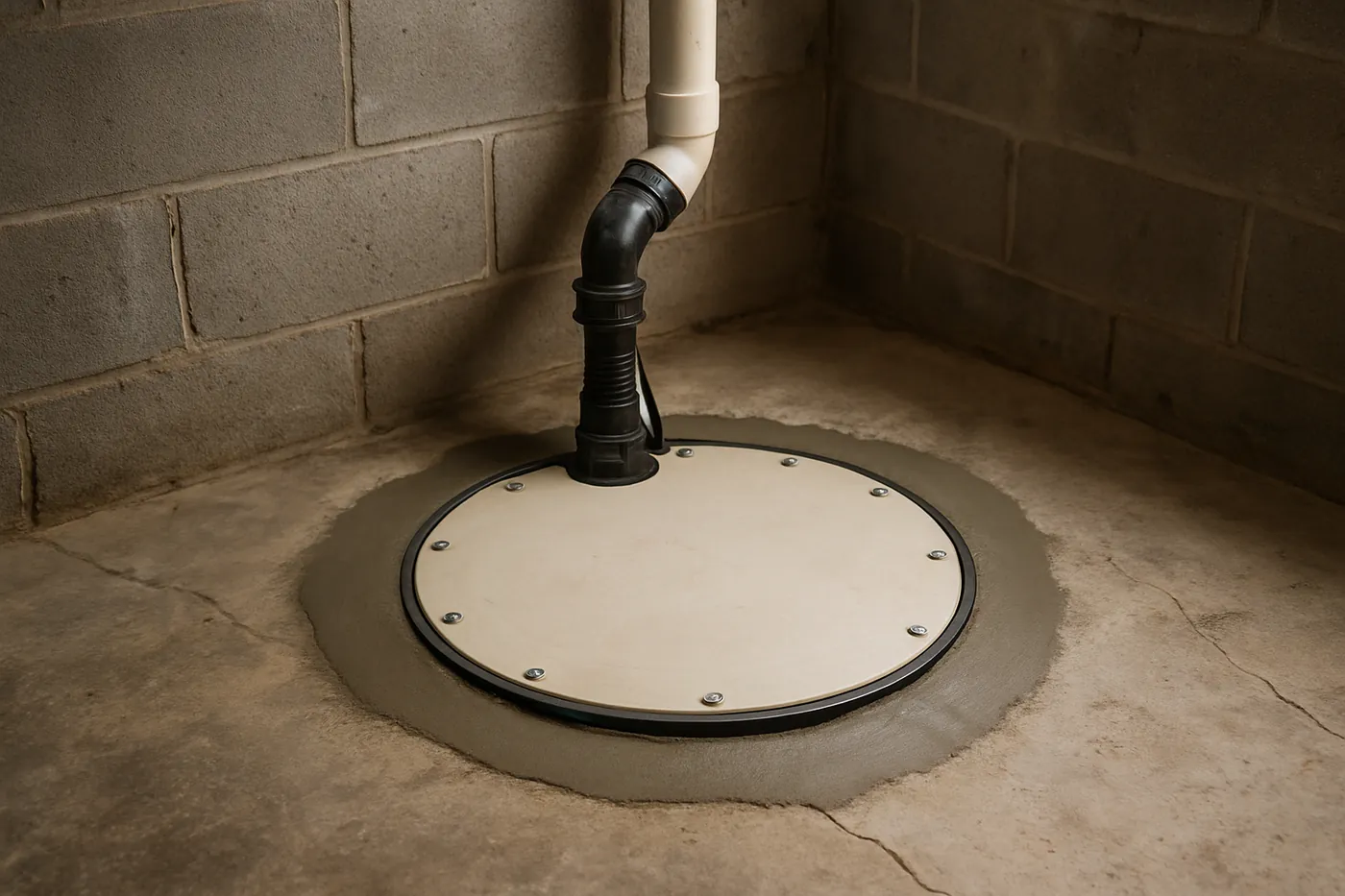
A century of construction practice on one street
Auburn's identity is tied to its automotive history (the town that built Auburns, Cords, and Duesenbergs) and its housing stock records the same span. Homes here range from pre-Depression construction with stone or early block foundations, through mid-century block basements, to recent construction on graded lots, and the right foundation approach differs across all three.
Older Auburn homes get read for mortar condition, wall plumb, and whether the movement is historic and finished or current and active: a distinction a laser survey and a dated crack mark settle. Mid-century block basements are the market's most common bowing-wall candidates, since they've now taken sixty or seventy winters of freeze loading. Newer homes get the fill-versus-native question that follows recent grading anywhere in this region.
A well-kept town raises the standard for repair
Auburn maintains its historic character deliberately, and that affects how work gets scoped on older properties. Exterior excavation against a period foundation disturbs mature landscaping and original masonry, which is one more reason interior drainage tends to be the right answer here. It does the same job from inside, without touching what makes the house what it is. Where exterior work genuinely is required, the scope says why, in writing, alongside the interior price so you can weigh both.
Asked in Auburn
Is my mid-century block basement likely to bow?
It's the most common candidate in this market. Block walls built in the 1950s and 60s have now taken sixty or seventy winters of freeze loading from saturated backfill, and that's exactly the exposure that produces the horizontal crack partway up the wall. A plumb line and five minutes tells you where yours stands.
Will foundation work damage my historic home's exterior?
Not with interior drainage, which is one reason it's usually the right approach on period properties here. The same job gets done from inside without touching original masonry or mature landscaping. Where exterior excavation genuinely is required, the scope explains why alongside the interior price so you can weigh both.
Our cracks are decades old and haven't changed. Urgent?
Probably not. Movement that finished long ago is a different situation from movement that's active, and the two can be separated: a dated pencil mark and a laser floor survey give you a documented baseline, so 'is it getting worse?' becomes measurable instead of a memory test.
Is DeKalb County covered?
Yes, Auburn and the surrounding DeKalb County communities are part of this site's service area. Ask for any travel to be quoted openly in the scope.
Auburn's housing, decade by decade
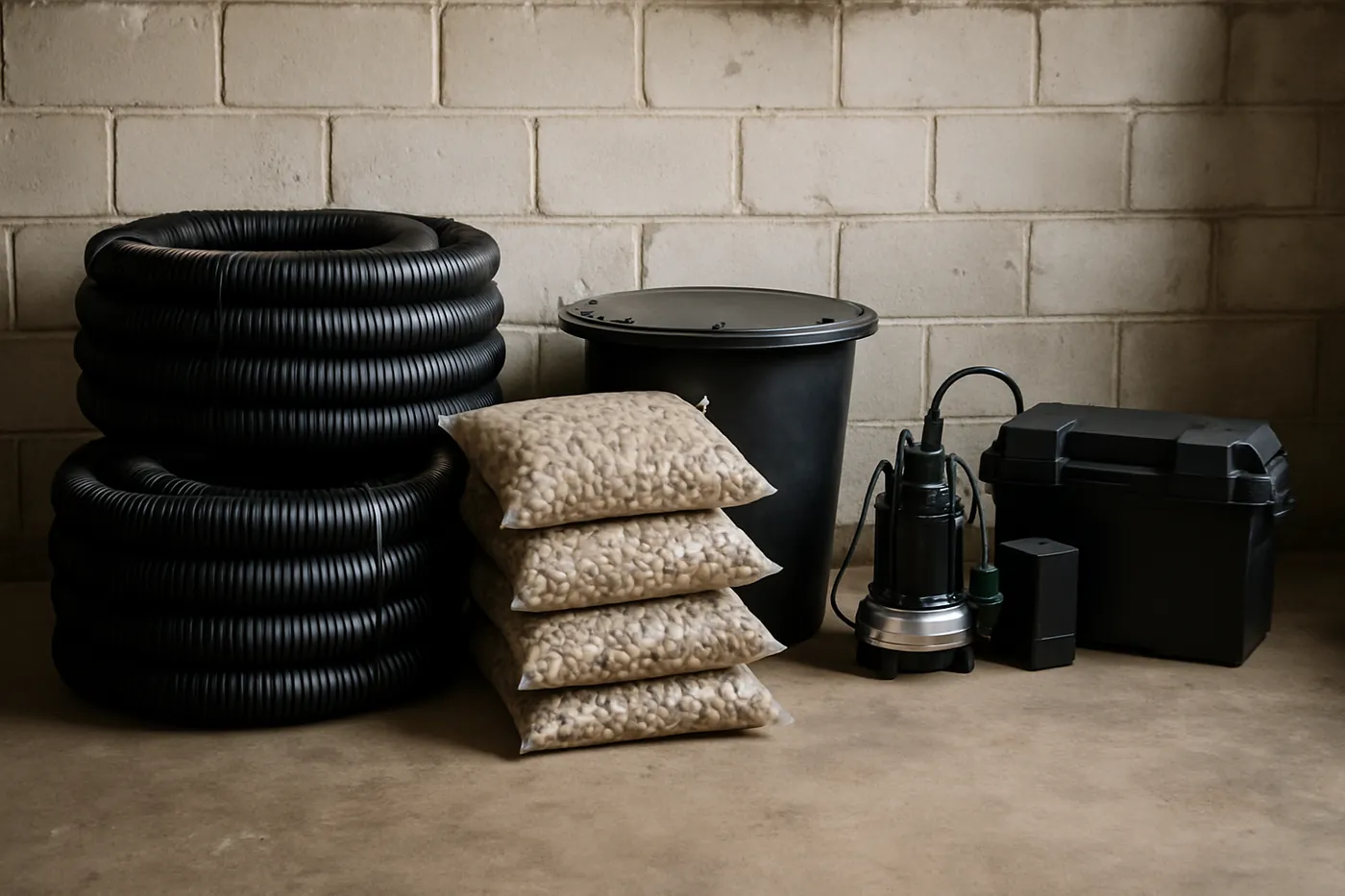
Auburn has about 5,900 homes in the Census Bureau's 2020-2024 American Community Survey, with a median build year of 1980. Close to a quarter (23%) were built before 1940 and a third before 1960, while about 23% date from 2000 or later. Roughly 77% are owner-occupied. Those numbers back the three eras described above: pre-war stone and block, mid-century block, and newer graded lots.
Cedar Creek through town
Cedar Creek runs through Auburn, and USGS has gauged it at 18th Street since 2001. Auburn is a state-designated MS4 community; its Water Pollution Control Department runs the stormwater program and describes the storm system's drains, ditches, catch basins and pipes as meant for rainwater only. A sump or footing drain should discharge to the yard or an approved outlet, not a sanitary line.
What Auburn's building code says
Auburn's Chapter 151 requires a permit for any work involving a structural change or the installation of a permanent foundation. Roofing, siding, gutters, windows and doors are exempt when nothing structural changes. The Building, Planning and Development Department is at 210 South Cedar Street, second floor (260-925-6449). Pier or wall-restraint work will usually be structural, so ask the specialist who files the permit.
Measure first: wall plumb, crack widths, floor elevations, the sump and its discharge. See the cost guide or the full service list.
Get a Fort Wayne foundation evaluation
Tell us what the basement is doing: water at the cove joint, a wall bowing inward, a horizontal crack in block, floors going out of level, and we'll pass it to one independent local specialist for an evaluation. You get a call back from a local specialist who serves Fort Wayne.